
 RSS Feed - Blog
About: Kernel-Based Analysis of Biological Sequences Changes:
|


About: Lasso and elastic-net regularized generalized linear models Changes:Fetched by r-cran-robot on 2013-04-01 00:00:05.081872
|

About: Pebl is a python library and command line application for learning the structure of a Bayesian network given prior knowledge and observations. Changes:Updated version to 1.0.1
|


About: CARP: The Clustering Algorithms’ Referee Package Changes:Generalized overlap error and some bugs have been fixed
|
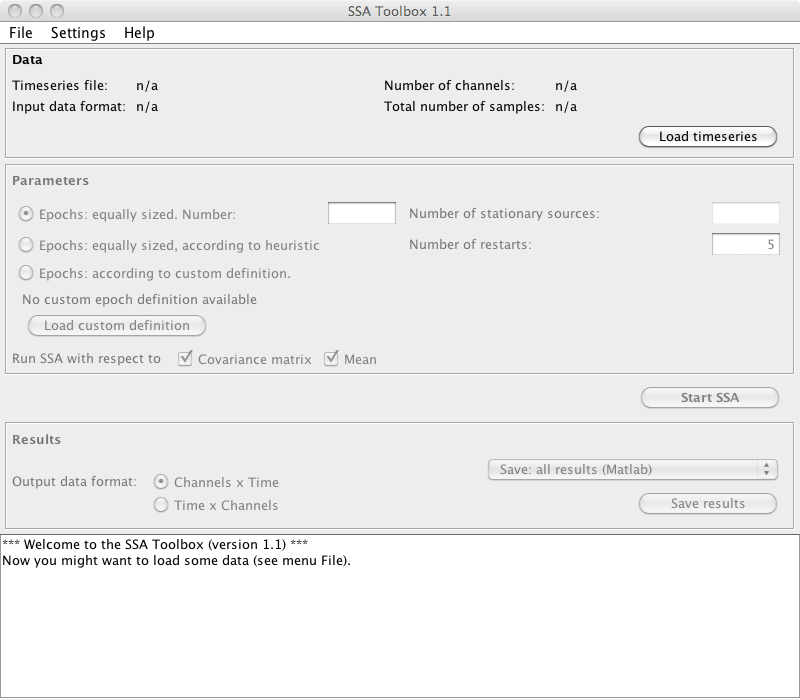
About: The SSA Toolbox is an efficient, platform-independent, standalone implementation of the Stationary Subspace Analysis algorithm with a friendly graphical user interface and a bridge to Matlab. Stationary Subspace Analysis (SSA) is a general purpose algorithm for the explorative analysis of non-stationary data, i.e. data whose statistical properties change over time. SSA helps to detect, investigate and visualize temporal changes in complex high-dimensional data sets. Changes:
|
About: MDP is a Python library of widely used data processing algorithms that can be combined according to a pipeline analogy to build more complex data processing software. The base of available algorithms includes signal processing methods (Principal Component Analysis, Independent Component Analysis, Slow Feature Analysis), manifold learning methods ([Hessian] Locally Linear Embedding), several classifiers, probabilistic methods (Factor Analysis, RBM), data pre-processing methods, and many others. Changes:What's new in version 3.3?
|


About: The DL-Learner framework contains several algorithms for supervised concept learning in Description Logics (DLs) and OWL. Changes:See http://dl-learner.org/development/changelog/.
|

About: The UniverSVM is a SVM implementation written in C/C++. Its functionality comprises large scale transduction via CCCP optimization, sparse solutions via CCCP optimization and data-dependent [...] Changes:Minor changes: fix bug on set_alphas_b0 function (thanks to Ferdinand Kaiser - ferdinand.kaiser@tut.fi)
|
About: Apache Mahout is an Apache Software Foundation project with the goal of creating both a community of users and a scalable, Java-based framework consisting of many machine learning algorithm [...] Changes:Apache Mahout introduces a new math environment we call Samsara, for its theme of universal renewal. It reflects a fundamental rethinking of how scalable machine learning algorithms are built and customized. Mahout-Samsara is here to help people create their own math while providing some off-the-shelf algorithm implementations. At its core are general linear algebra and statistical operations along with the data structures to support them. You can use is as a library or customize it in Scala with Mahout-specific extensions that look something like R. Mahout-Samsara comes with an interactive shell that runs distributed operations on a Spark cluster. This make prototyping or task submission much easier and allows users to customize algorithms with a whole new degree of freedom. Mahout Algorithms include many new implementations built for speed on Mahout-Samsara. They run on Spark 1.3+ and some on H2O, which means as much as a 10x speed increase. You’ll find robust matrix decomposition algorithms as well as a Naive Bayes classifier and collaborative filtering. The new spark-itemsimilarity enables the next generation of cooccurrence recommenders that can use entire user click streams and context in making recommendations.
|

About: Variational Bayesian inference tools for Python Changes:
|
About: Classification, Regression and Feature Evaluation Changes:Fetched by r-cran-robot on 2018-01-01 00:00:07.164852
|
About: Kernel-based Learning Platform (KeLP) is Java framework that supports the implementation of kernel-based learning algorithms, as well as an agile definition of kernel functions over generic data representation, e.g. vectorial data or discrete structures. The framework has been designed to decouple kernel functions and learning algorithms, through the definition of specific interfaces. Once a new kernel function has been implemented, it can be automatically adopted in all the available kernel-machine algorithms. KeLP includes different Online and Batch Learning algorithms for Classification, Regression and Clustering, as well as several Kernel functions, ranging from vector-based to structural kernels. It allows to build complex kernel machine based systems, leveraging on JSON/XML interfaces to instantiate prediction models without writing a single line of code. Changes:In addition to minor improvements and bug fixes, this release includes:
Check out this new version from our repositories. API Javadoc is already available. Your suggestions will be very precious for us, so download and try KeLP 2.2.2!
|

About: Java-ML is a collection of machine learning and data mining algorithms, which aims to be a readily usable and easily extensible API for both software developers and research scientists. Changes:new release
|
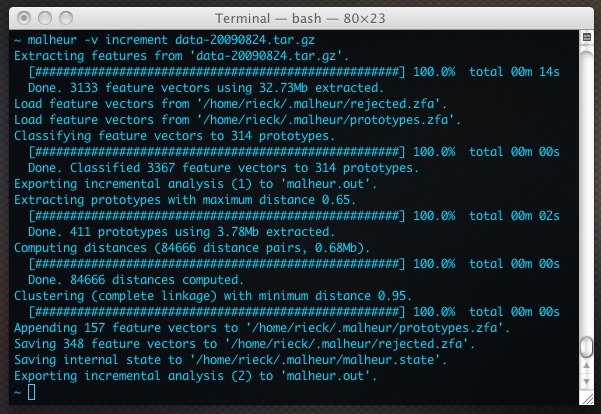
About: Automatic Analysis of Malware Behavior using Machine Learning Changes:Support for new version of libarchive. Minor bug fixes.
|
About: Classification and visualization Changes:Fetched by r-cran-robot on 2013-04-01 00:00:05.722314
|
About: R version of GENetic Optimization Using Derivatives Changes:Fetched by r-cran-robot on 2013-04-01 00:00:08.101900
|
About: DiffSharp is a functional automatic differentiation (AD) library providing gradients, Hessians, Jacobians, directional derivatives, and matrix-free Hessian- and Jacobian-vector products as higher-order functions. It allows exact and efficient calculation of derivatives, with support for nesting. Changes:Fixed: Bug fix in forward AD implementation of Sigmoid and ReLU for D, DV, and DM (fixes #16, thank you @mrakgr) Improvement: Performance improvement by removing several more Parallel.For and Array.Parallel.map operations, working better with OpenBLAS multithreading Added: Operations involving incompatible dimensions of DV and DM will now throw exceptions for warning the user
|

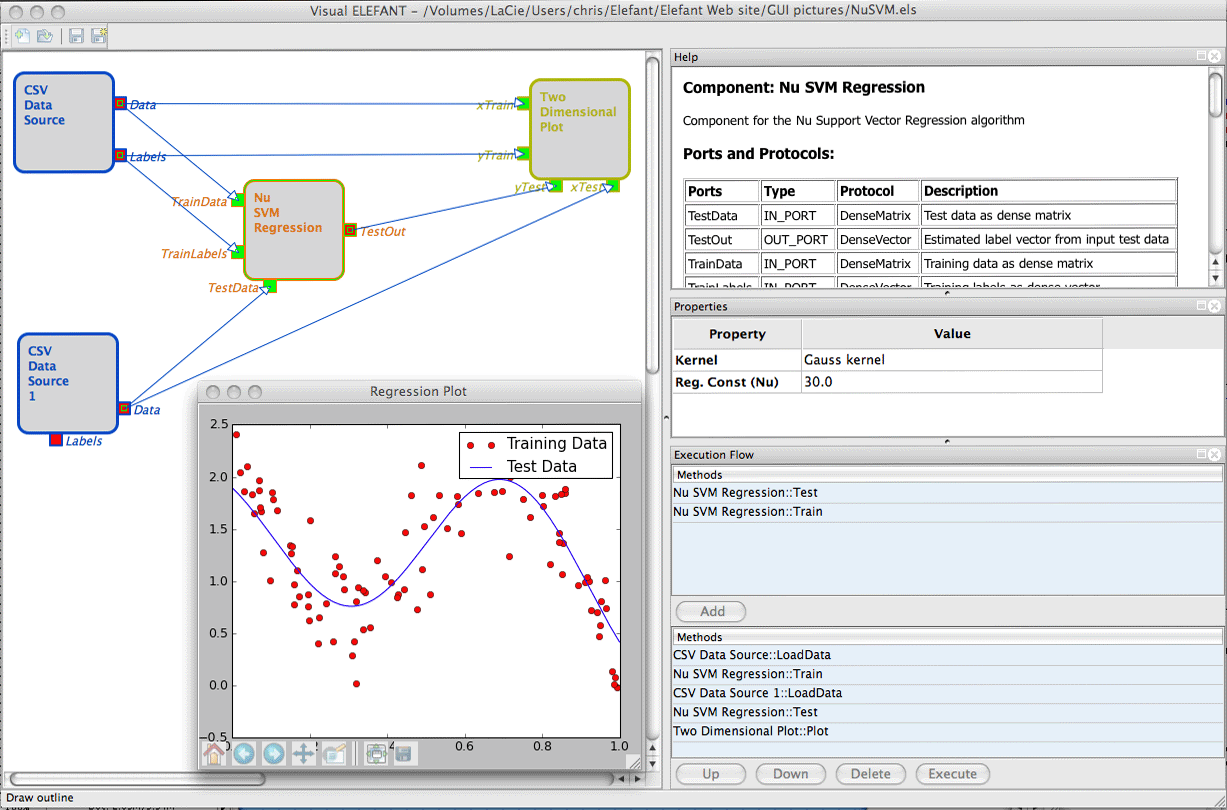
About: Elefant is an open source software platform for the Machine Learning community licensed under the Mozilla Public License (MPL) and developed using Python, C, and C++. We aim to make it the platform [...] Changes:This release contains the Stream module as a first step in the direction of providing C++ library support. Stream aims to be a software framework for the implementation of large scale online learning algorithms. Large scale, in this context, should be understood as something that does not fit in the memory of a standard desktop computer. Added Bundle Methods for Regularized Risk Minimization (BMRM) allowing to choose from a list of loss functions and solvers (linear and quadratic). Added the following loss classes: BinaryClassificationLoss, HingeLoss, SquaredHingeLoss, ExponentialLoss, LogisticLoss, NoveltyLoss, LeastMeanSquareLoss, LeastAbsoluteDeviationLoss, QuantileRegressionLoss, EpsilonInsensitiveLoss, HuberRobustLoss, PoissonRegressionLoss, MultiClassLoss, WinnerTakesAllMultiClassLoss, ScaledSoftMarginMultiClassLoss, SoftmaxMultiClassLoss, MultivariateRegressionLoss Graphical User Interface provides now extensive documentation for each component explaining state variables and port descriptions. Changed saving and loading of experiments to XML (thereby avoiding storage of large input data structures). Unified automatic input checking via new static typing extending Python properties. Full support for recursive composition of larger components containing arbitrary statically typed state variables.
|
About: RL-Glue allows agents, environments, and experiments written in Java, C/C++, Matlab, Python, and Lisp to inter operate, accelerating research by promoting software re-use in the community. Changes:RL-Glue paper has been published in JMLR.
|
About: An implementation of the infinite hidden Markov model. Changes:Since 0.4: Removed dependency from lightspeed (now using statistics toolbox). Updated to newer matlab versions.
|