
 RSS Feed - Blog
About: A Matlab implementation of Multilinear PCA (MPCA) and MPCA+LDA for dimensionality reduction of tensor data with sample code on gait recognition Changes:
|


About: CIlib is a library of computational intelligence algorithms and supporting components that allows simple extension and experimentation. The library is peer reviewed and is backed by a leading research group in the field. The library is under active development. Changes:Initial Announcement on mloss.org.
|

About: This is the core MCMC sampler for the nonparametric sparse factor analysis model presented in David A. Knowles and Zoubin Ghahramani (2011). Nonparametric Bayesian Sparse Factor Models with application to Gene Expression modelling. Annals of Applied Statistics Changes:Initial Announcement on mloss.org.
|
About: AISAIC software for analyzing human DNA copy numbers and detecting significant copy number alterations Changes:Initial Announcement on mloss.org.
|
About: HLearn makes simple machine learning routines available in Haskell by expressing them according to their algebraic structure Changes:Updated to version 1.0
|

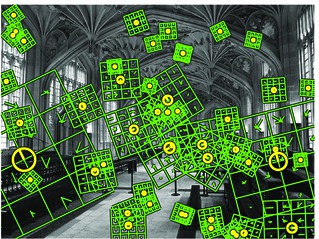
About: The VLFeat open source library implements popular computer vision algorithms including affine covariant feature detectors, HOG, SIFT, MSER, k-means, hierarchical k-means, agglomerative information bottleneck, SLIC superpixels, and quick shift. It is written in C for efficiency and compatibility, with interfaces in MATLAB for ease of use, and detailed documentation throughout. It supports Windows, Mac OS X, and Linux. The latest version of VLFeat is 0.9.16. Changes:VLFeat 0.9.16: Added VL_COVDET() (covariant feature detectors). This function implements the following detectors: DoG, Hessian, Harris Laplace, Hessian Laplace, Multiscale Hessian, Multiscale Harris. It also implements affine adaptation, estiamtion of feature orientation, computation of descriptors on the affine patches (including raw patches), and sourcing of custom feature frame. Addet the auxiliary function VL_PLOTSS(). This is the second point update supported by the PASCAL Harvest programme. VLFeat 0.9.15: Added VL_HOG() (HOG features). Added VL_SVMPEGASOS() and a vastly improved SVM implementation. Added IHASHSUM (hashed counting). Improved INTHIST (integral histogram). Added VL_CUMMAX(). Improved the implementation of VL_ROC() and VL_PR(). Added VL_DET() (Detection Error Trade-off (DET) curves). Improved the verbosity control to AIB. Added support for Xcode 4.3, improved support for past and future Xcode versions. Completed the migration of the old test code in toolbox/test, moving the functionality to the new unit tests toolbox/xtest. Improved credits. This is the first point update supported by the PASCAL Harvest (several more to come shortly).
|
About: MDP is a Python library of widely used data processing algorithms that can be combined according to a pipeline analogy to build more complex data processing software. The base of available algorithms includes signal processing methods (Principal Component Analysis, Independent Component Analysis, Slow Feature Analysis), manifold learning methods ([Hessian] Locally Linear Embedding), several classifiers, probabilistic methods (Factor Analysis, RBM), data pre-processing methods, and many others. Changes:What's new in version 3.3?
|


About: "Pattern" is a web mining module for Python. It bundles tools for data retrieval, text analysis, clustering and classification, and data visualization. Changes:
|

|
About: A Matlab implementation of Uncorrelated Multilinear Discriminant Analysis (UMLDA) for dimensionality reduction of tensor data via tensor-to-vector projection Changes:Initial Announcement on mloss.org.
|

About: We study the problem of robust feature extraction based on L21 regularized correntropy in both theoretical and algorithmic manner. In theoretical part, we point out that an L21-norm minimization can be justified from the viewpoint of half-quadratic (HQ) optimization, which facilitates convergence study and algorithmic development. In particular, a general formulation is accordingly proposed to unify L1-norm and L21-norm minimization within a common framework. In algorithmic part, we propose an L21 regularized correntropy algorithm to extract informative features meanwhile to remove outliers from training data. A new alternate minimization algorithm is also developed to optimize the non-convex correntropy objective. In terms of face recognition, we apply the proposed method to obtain an appearance-based model, called Sparse-Fisherfaces. Extensive experiments show that our method can select robust and sparse features, and outperforms several state-of-the-art subspace methods on largescale and open face recognition datasets. Changes:Initial Announcement on mloss.org. |
About: A Matlab implementation of Uncorrelated Multilinear PCA (UMPCA) for dimensionality reduction of tensor data via tensor-to-vector projection Changes:Initial Announcement on mloss.org.
|

About: The code is for computing state-of-the-art video descriptors for action recognition. The most up-to-date information can be found at: http://lear.inrialpes.fr/people/wang/dense_trajectories Changes:Initial Announcement on mloss.org.
|
About: Ran He, Wei-Shi Zheng,Tieniu Tan, and Zhenan Sun. Half-quadratic based Iterative Minimization for Robust Sparse Representation. Submitted to IEEE Trans. on Pattern Analysis and Machine Intelligence. Changes:Initial Announcement on mloss.org.
|
|
About: This archive contains a Matlab implementation of the Multilinear Principal Component Analysis (MPCA) algorithm and MPCA+LDA, as described in the paper Haiping Lu, K.N. Plataniotis, and A.N. Venetsanopoulos, "MPCA: Multilinear Principal Component Analysis of Tensor Objects", IEEE Transactions on Neural Networks, Vol. 19, No. 1, Page: 18-39, January 2008. Changes:Initial Announcement on mloss.org.
|
About: This is demo program on global thresholding for image of bright small objects, such as aircrafts in airports. the program include four method, otsu,2D-Tsallis,PSSIM, Smoothnees Method. Changes:Initial Announcement on mloss.org.
|
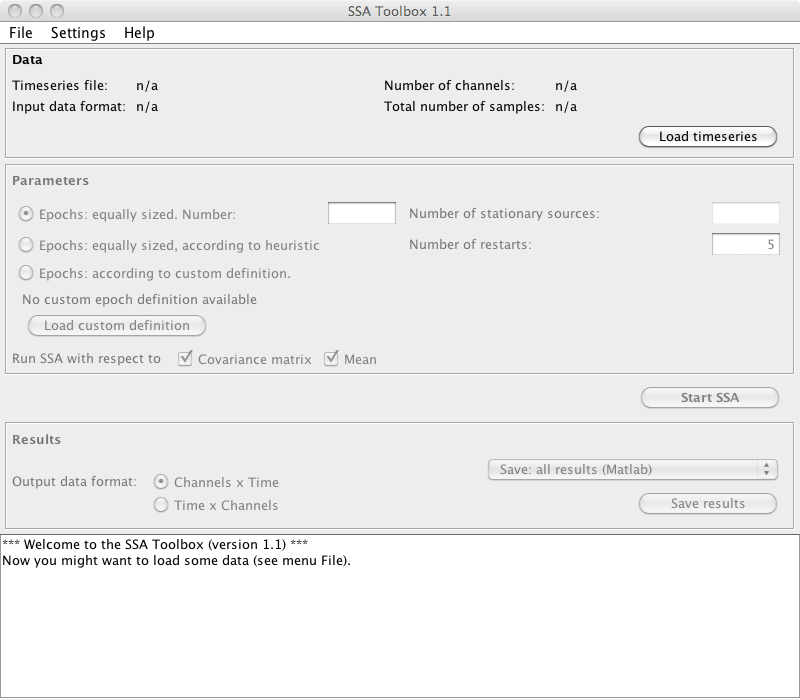
About: The SSA Toolbox is an efficient, platform-independent, standalone implementation of the Stationary Subspace Analysis algorithm with a friendly graphical user interface and a bridge to Matlab. Stationary Subspace Analysis (SSA) is a general purpose algorithm for the explorative analysis of non-stationary data, i.e. data whose statistical properties change over time. SSA helps to detect, investigate and visualize temporal changes in complex high-dimensional data sets. Changes:
|

About: Nonnegative Sparse Coding, Discriminative Semi-supervised Learning, sparse probability graph Changes:Initial Announcement on mloss.org.
|
About: In this paper, we propose an improved principal component analysis based on maximum entropy (MaxEnt) preservation, called MaxEnt-PCA, which is derived from a Parzen window estimation of Renyi’s quadratic entropy. Instead of minimizing the reconstruction error either based on L2-norm or L1-norm, the MaxEnt-PCA attempts to preserve as much as possible the uncertainty information of the data measured by entropy. The optimal solution of MaxEnt-PCA consists of the eigenvectors of a Laplacian probability matrix corresponding to the MaxEnt distribution. MaxEnt-PCA (1) is rotation invariant, (2) is free from any distribution assumption, and (3) is robust to outliers. Extensive experiments on real-world datasets demonstrate the effectiveness of the proposed linear method as compared to other related robust PCA methods. Changes:Initial Announcement on mloss.org.
|